
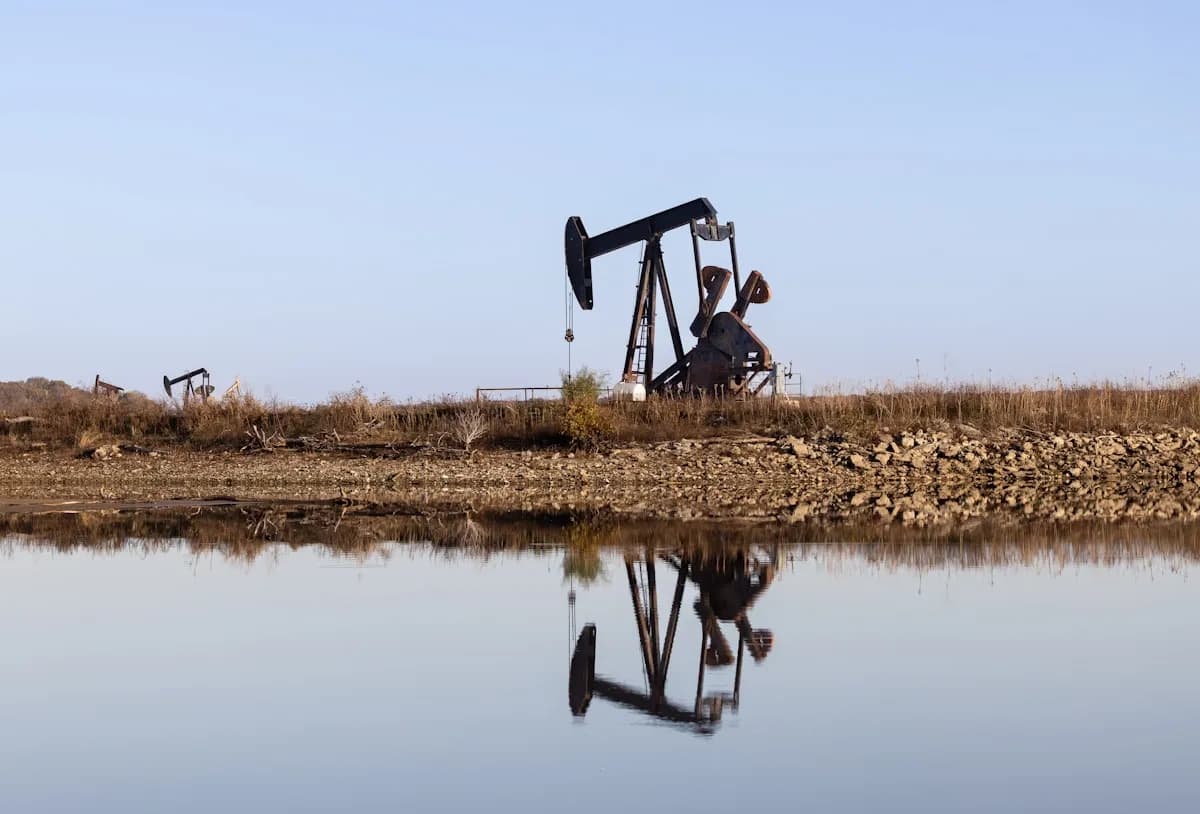
Ask any producer what they care about most in a first purchaser, and you'll get the same answer: reliability. They want to know that when their tanks are full, someone is coming to run them.
The reason is simple. A missed pickup isn't just an inconvenience. It can cascade into real damage—to wells, to leases, and to the relationship.
What happens when tanks fill up
When a lease tank reaches capacity and nobody comes to haul, the operator has a problem. Oil production doesn't have a pause button. If there's nowhere for the oil to go, the well has to be shut in.
Shutting in a well sounds temporary. Sometimes it is. But for many wells—especially older ones or those producing from tight formations—shutting in can cause permanent damage.
Paraffin and scale buildup. When flow stops, paraffin wax and mineral scale that were held in suspension by flowing fluid settle out and deposit on the formation face and in the tubing. In some wells, this reduces production by 30-50% even after the well is brought back online.
Formation damage. In tight formations like those common in the Permian Basin, shutting in allows pressure equalization that can force water into the oil-producing zone. Getting that well back to pre-shut-in rates may require a workover costing $50,000-$200,000.
Lease forfeiture risk. Many oil and gas leases contain cessation-of-production clauses. If production stops for a specified period—often 60 to 90 days—the lessee can lose the lease entirely. A single missed pickup won't trigger this, but a pattern of unreliable service can lead to extended shut-ins during low-price periods.
Tank overflows are worse
If a well isn't shut in and the tanks overflow, the consequences are immediate and severe:
- Environmental cleanup. Crude oil spills trigger state and federal reporting requirements. Cleanup costs vary wildly but can easily reach six figures for a significant release.
- Regulatory fines. The Railroad Commission of Texas takes spills seriously. Fines, increased scrutiny, and potential restrictions on operations follow.
- Remediation costs. Soil remediation, groundwater monitoring, and site restoration can take years and hundreds of thousands of dollars.
- Criminal liability. In egregious cases, operators and responsible parties can face criminal charges.
Producers remember
First purchasers compete for producer business. In many basins, producers have options for who buys their crude. When you miss pickups, word travels.
Producers talk to each other. A reputation for unreliable dispatch is hard to shake and easy to earn. It only takes a few missed runs to lose a producer's confidence—and their volumes.
Conversely, first purchasers known for reliable pickup service can command slightly tighter differentials because producers value the certainty.
Why pickups get missed
Most missed pickups aren't due to negligence. They happen because of information gaps:
Tank levels are unknown. Without real-time monitoring or regular communication with pumpers, dispatchers are estimating when tanks will be full. Estimates are wrong often enough to matter.
Scheduling is manual. When dispatch runs on a whiteboard or spreadsheet, it's easy to overlook a lease, double-book a driver, or fail to account for a driver calling in sick.
Communication breaks down. A pumper calls about a full tank. The message gets to the dispatcher. The dispatcher assigns a driver by text. The driver doesn't see the text for two hours. By then, another job has been assigned.
No early warning. Without production rate data and tank capacity information, there's no way to predict which leases will need service tomorrow or next week. Everything is reactive.
Building reliability into dispatch
The fix is systematic, not heroic. Reliable dispatch comes from having the right information at the right time:
Know your leases. Track tank capacity, estimated production rates, and days-to-full for every lease. This turns dispatch from reactive to predictive.
Assign with context. When creating a pickup job, see the lease location, estimated barrels, last BS&W reading, and any special instructions. Better information leads to better decisions.
Track in real time. Know where drivers are and what they're doing. If a driver is running behind, reassign the job before it becomes a missed pickup.
Close the loop. When a run ticket is submitted, it should flow back to your system immediately—not at end of day. This lets you confirm the pickup happened and update your tank level estimates.
The competitive advantage
In a market where margins are measured in dollars per barrel, operational reliability is one of the few things that truly differentiates one first purchaser from another.
Producers don't switch purchasers over a nickel on the differential. They switch when pickups get missed, when tanks overflow, and when they can't get a straight answer about when the truck is coming.
Invest in dispatch reliability and you protect your volumes, your producer relationships, and your reputation in the basin.