
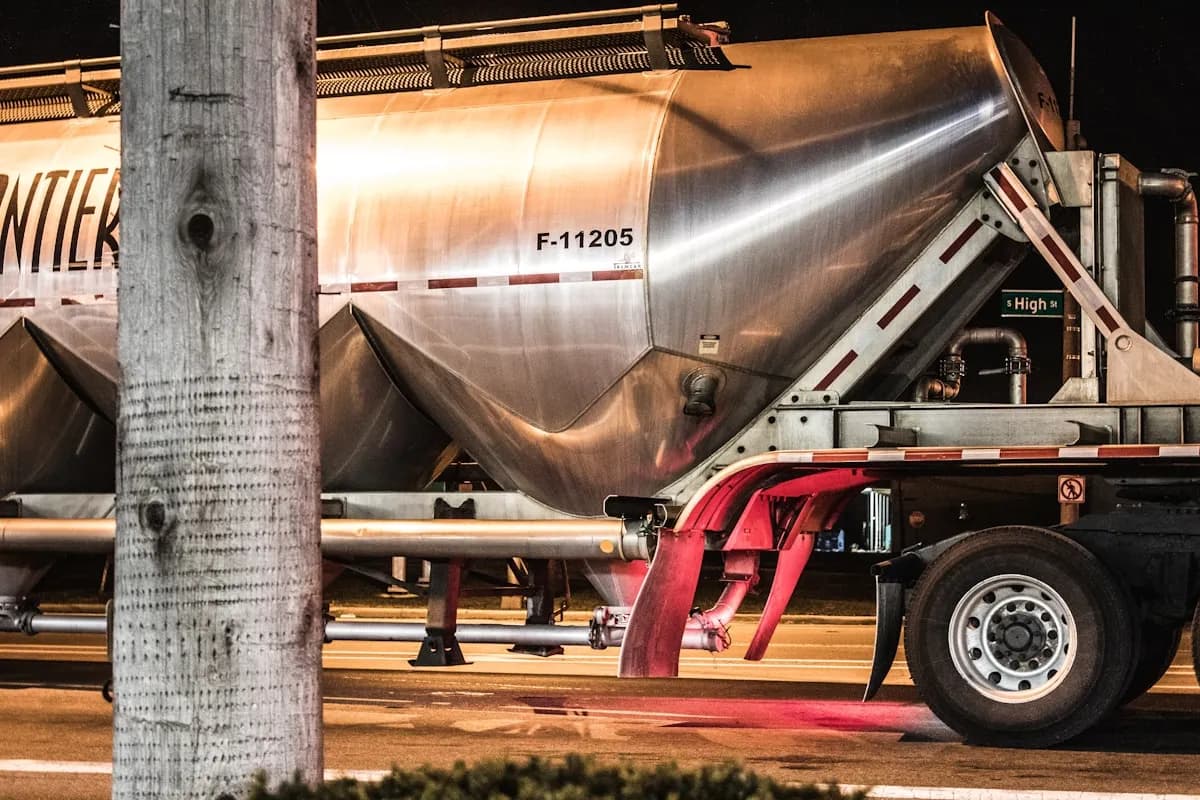
If you've never worked the oil field, you might assume crude oil truck drivers spend their day driving. They don't. Driving is probably the simplest part of the job.
A crude hauler is part driver, part measurement technician, part field inspector, and part diplomat. Understanding what they actually do—and what makes their job harder—matters if you're dispatching them, managing them, or building tools for them.
A typical day
A driver hauls crude on a 12-hour shift, usually starting before dawn. Here's what a shift actually looks like:
5:00 AM — Pre-trip inspection. Before the truck moves, the driver walks around the rig doing a full pre-trip safety check. Tires, brakes, lights, mirrors, horn, windshield. Fire extinguisher present? Spill kit? First aid kit? H2S monitor on and working? This isn't optional. It's DOT-required, and in the oil field, it's what keeps people alive.
5:30 AM — Dispatch assignment. The driver gets their route for the day. In many operations, this comes via phone call or text. In better-run operations, it's a digital assignment with the lease name, GPS coordinates, estimated barrels, and any special instructions.
6:00 AM — Arrive at the first lease. This is where the real work begins.
At the lease: the 45-minute process
What happens at a lease takes longer than most people expect.
Climb the tank. The driver climbs the tank battery stairs and opens the thief hatch on top of the stock tank. If the lease has H2S—and many Permian Basin leases do—the H2S monitor on the driver's chest is the only thing between them and a potentially lethal gas exposure.
Gauge the tank. The driver lowers a weighted gauge tape (plumb bob) into the tank until it hits the striker plate at the bottom. They read the oil level off the tape. This measurement, cross-referenced with the tank's strapping chart, gives the opening volume in barrels.
Check for water. Using a thief (a small sample cylinder), the driver pulls a sample from the bottom of the tank and checks for a water layer. Water-finding paste on the gauge tape confirms where the oil-water interface is. The oil above the water cut is what gets loaded.
Run BS&W. The driver pulls a representative sample from the tank and tests it in a hand centrifuge. Equal parts crude and solvent go into a graduated tube, get heated, and get spun. The water and sediment settle to the bottom. The driver reads the percentage. If it's over spec, the load gets rejected.
Check temperature and gravity. A thermometer in the tank gives the observed temperature. A hydrometer on a sample gives the API gravity. Both are needed for the volume correction calculation on the run ticket.
Load the crude. The driver connects hoses to the tank's sales valve, breaks the numbered tamper seal, and begins loading. Full truckloads run 180-210 barrels depending on the trailer configuration.
Close the gauge. After loading, the driver gauges the tank again. Opening gauge minus closing gauge, corrected for temperature and BS&W, gives the net barrels.
Complete the run ticket. This is the custody transfer document. The driver records: opening and closing gauges, temperature, API gravity, BS&W percentage, seal numbers (old one removed, new one applied), estimated barrels, date, time, and both signatures—driver and pumper, if the pumper is present.
Seal the tank. A new numbered tamper seal goes on the sales valve. The old seal number and new seal number are both recorded on the ticket.
The drive is the easy part
After all that, the driver hauls the load to a pipeline injection point or terminal. At delivery, there's another measurement process—offload readings, delivery ticket, and confirmation.
Then they drive back and do it again.
On a good day with moderate haul distances, a driver completes 2-3 loads. Each load involves 45-60 minutes of measurement and documentation work at the lease, plus the drive time.
What makes the job harder than it needs to be
Paper everything. Many drivers still fill out paper run tickets in the field. Writing legibly on a clipboard in 20-degree weather with gloves on is exactly as pleasant as it sounds. Then those tickets sit in the truck until end of shift, when they get dropped off at the office for manual entry.
Phone-based dispatch. Getting assignments via text or phone call works until it doesn't. Drivers miss calls. Instructions get garbled. Lease locations are described verbally instead of pinned on a map. "Turn left at the old windmill" is not GPS coordinates.
No feedback loop. Drivers submit tickets and hear nothing. Did the BS&W reading match the lab? Was the volume correct? Without feedback, drivers can't calibrate their technique.
Isolation. Crude hauling is solitary work in remote locations. Drivers spend most of their shift alone. Good communication tools and clear job information make the isolation more manageable.
What good tools look like for drivers
Drivers don't need complicated software. They need tools that work in the field:
Clear job assignments with the lease name, GPS pin, estimated barrels, last BS&W reading, and any special instructions. All in one place, on their phone.
Digital run tickets with structured input fields. Dropdown menus instead of handwriting. Number fields with reasonable validation. Signature capture on screen. Photo capture for documentation.
Offline capability. Cell service in the Permian Basin is spotty at best. A driver app that stops working when there's no signal is useless. Forms should work offline and sync when connectivity returns.
Simplicity. A driver doing 3 loads a day fills out 3 run tickets, each with a dozen-plus fields. The tool should make this faster than paper, not slower. Every extra tap is a problem.
Respect the craft
Good crude hauling drivers are skilled professionals. They hold CDL Class A with tanker and hazmat endorsements. They know measurement, chemistry, and safety. They work long hours in harsh conditions.
The tools and processes we build should make their expertise easier to apply—not bury it under bad software and paper forms. When drivers can focus on accurate measurement instead of fighting with paperwork, everyone benefits: the driver, the dispatcher, the producer, and the bottom line.